New ideas using fibres for reinforcement
≡
⇨
⇨
⇨
⇨
⇨
⇨
Source: Fibre Reinforced Concrete Association
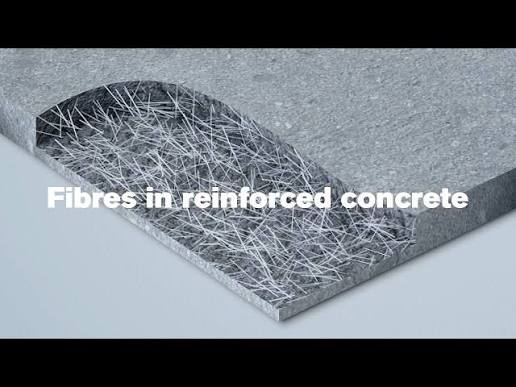
Fibre Reinforced Concrete
Natural fibres to reinforce concrete and plastic matrices
Problem
⇻
Natural fibres do not adhere to cement or plastic matrices
⇻
Other fibres can be used, such as glass, carbon or some plastics.
⇻
Usually use steel reinforcement,
>
or steel mesh, when making ferro-cement structures.
⇻
Lime mortar does adhere to hemp, but its use is limited
Solution
⇻
Anaerobic retting should remove surface sugars from natural fibres.
⇻
Could use thermophyllic microbes to remove all sugars.
⇻
Cleaned fibres should adhere to cement or plastic matrices
>
short fibres would replace sand, reducing concrete density
>
longer fibres could replace steel reinforcement
>
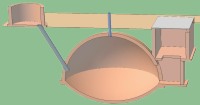
woven fibres could replace steel mesh for fibre-cement structures.
Advantages and issues
⇻
Natural fibres are much cheaper than steel
⇻
Natural fibres are much lighter than steel
⇻
Natural fibres can be easily woven to make fibre-cement structures
⇻
There is an issue with water absorption, steel rusts, fibres may rot.
>
but concrete can be water-proofed
Scholarly links:
Napier grass fibres as reinforcement
Natural fibres to reinforce concrete
Napier fibres with epoxy matrix